
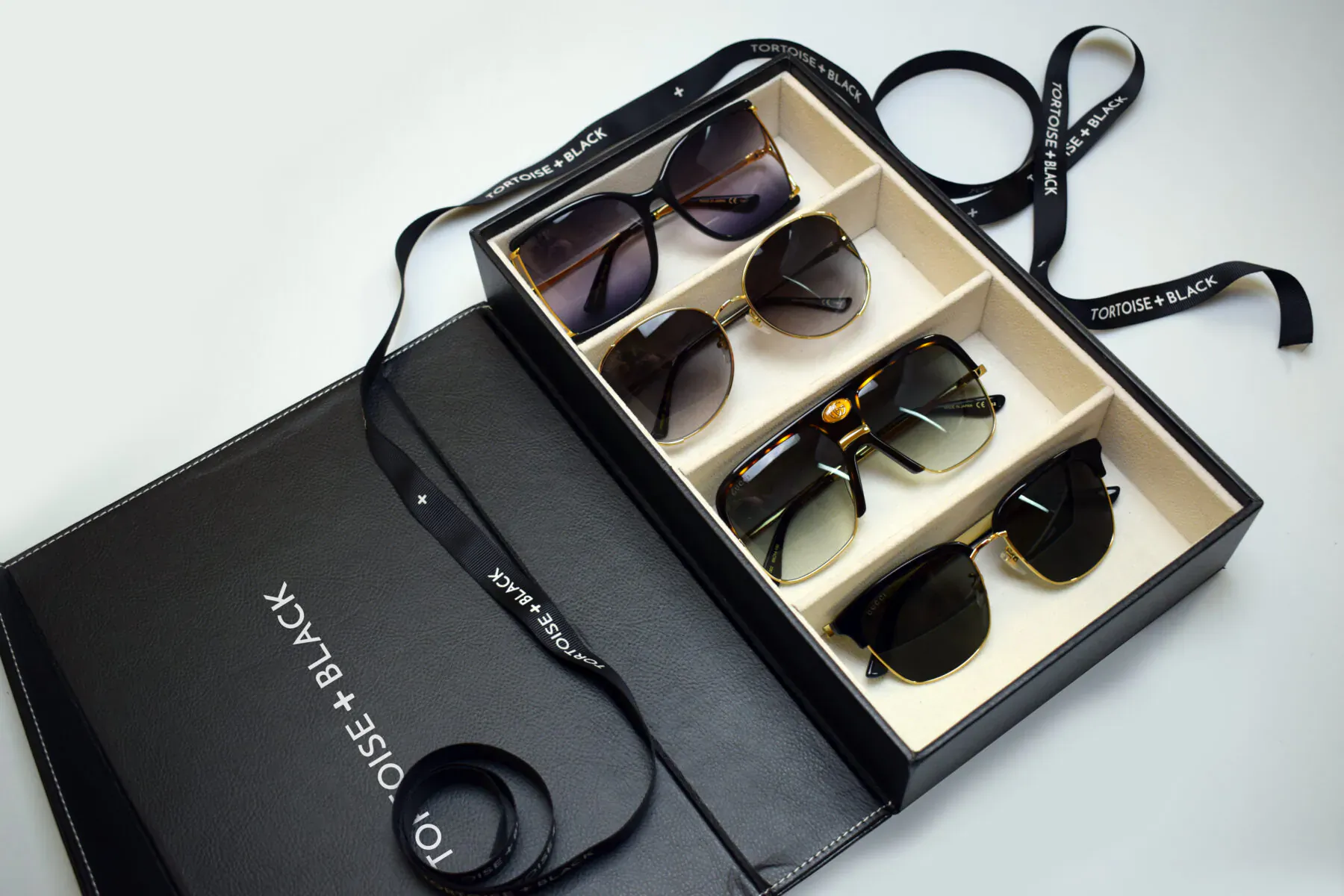
Designer sunglasses retain their value through structural integrity—specifically cured cellulose acetate, titanium hardware, and optical-grade lenses—rather than mere logo placement. You are paying for a micro-architectural piece that sits on your face. The instant aesthetic upgrade is undeniable. Consumers demand instant polish, and a sharp pair of frames delivers exactly that. It masks exhaustion. It projects authority. It completes a look faster than any tailored garment. You are buying a highly functional shield that instantly redefines your facial geometry.
The Economics of the Eyewear Industry
The optical market operates on an entirely different wavelength than ready-to-wear fashion. A dress requires sizing, tailoring, and specific body types to sell. Sunglasses do not. They are the ultimate democratic luxury item, offering an entry point into heritage fashion houses for a fraction of the cost of a leather handbag.
Brands understand this dynamic intimately. They rely on it. A significant portion of a fashion house’s quarterly revenue relies directly on its accessories division. The global luxury client base currently sits at 330 million, representing a slight contraction from peak pandemic highs. But opticals remain stubbornly resilient. Shoppers are tightening their belts on five-figure eveningwear. They refuse to compromise on a $450 pair of shades.
The data confirms this consumer behavior. Overall personal luxury goods spending is stabilizing around €358 billion. Yet, within that massive macroeconomic figure, specific accessory categories are surging. The luxury eyewear market is poised to hit $34.21 billion by 2026. People want visible status markers that serve a highly practical daily function. Further drilling into the numbers reveals that premium sunglasses capture 35% of luxury eyewear revenue. They are the high-margin heroes of the global accessory department. Injection-molded frames cost next to nothing to produce compared to hand-polished acetate, yet brands command premium pricing across the board.
The true difference between a generic frame and a luxury investment lies entirely in the finishing process and the supply chain.
How to Differentiate Genuine Craftsmanship from Clever Branding?
Quality eyewear possesses physical weight. It feels balanced in the hand. It does not creak when you fold the temples.
You must look beyond the gold-foiled logo stamped on the arm. Countless consumers blindly hand over cash for poor-quality injection plastic simply because a famous moniker sits on the side. Stop doing that. Assess the core materials of the product.
Mazzucchelli Acetate: The undisputed standard of optical plastics. Derived from cotton linters and wood pulp, it is hypoallergenic, incredibly flexible, and holds rich, multi-layered color that petroleum-based plastics cannot mimic.
Five-Barrel Hinges: A single hinge held by a flimsy pin will snap under pressure. Five interlocking metal barrels ensure the temple arm stays tight against the frame front for years.
Wire Cores: Hold your frames up to a bright light. You should see a distinct metal rod running through the acetate temple. This allows a professional optician to heat and adjust the frame to your specific skull shape. Without it, the frame is rigid, unadjustable, and inherently cheap.
Optical-Grade Lenses: Polycarbonate is meant for safety goggles and cheap sports glasses. Luxury lenses use CR-39 resin for superior optical clarity, or treated mineral glass for absolute peak scratch resistance.
A well-crafted frame remains one of those wardrobe essentials that never go out of style. You wear them daily. You abandon them on cafe tables. They endure constant mechanical stress from being pushed onto the top of your head. Buying cheap injection-molded plastic guarantees a broken frame within a few months.
Where Do Iconic Heritage Brands Fit in a Modern Rotation?
Heritage fashion houses understand longevity. They rarely chase fleeting internet micro-trends. Instead, they iterate on their own historical archives.
When evaluating the accessories market, specific names carry weight for a distinct reason. They established the geometric codes we now consider standard across the industry. Anchoring your optical collection with established luxury houses provides a strict baseline of manufacturing quality and immediate visual recognition.
For example, investing in a pair of Prada sunglasses for women secures a silhouette that ignores the chaotic seasonal trend cycle. The brand consistently utilizes thick, sculptural acetate. The shapes are aggressive but remarkably wearable. You are buying a specific Milanese attitude. It works precisely because it refuses to apologize for its boldness.
Smaller independent labels often push extreme avant-garde shapes that look ridiculous off the runway. Mass-market brands simply copy whatever went viral on social media last week. The heritage luxury tier sits comfortably in the middle, offering extreme design competence without the risk of looking entirely obsolete by next winter. Review any comprehensive women’s fashion trends guide, and you will notice a recurring theme. The oversized, structural frame always returns. It is a permanent fixture in the professional stylist’s toolkit.
What is the Best Shape for Your Specific Bone Structure?
Ignore the standard “heart-shaped face” infographics pushed by cheap optical chains. They are reductive and largely useless.
Operate on the strict principle of opposition. If your jawline is deeply angular and sharp, introduce soft, sloping curves to the face. Think classic metal aviators or rounded panto shapes. If your face features softer, rounded dimensions, impose architecture upon it with hard, rectangular frames or sharp, dramatic cat-eyes.
The ultimate goal is creating visual friction. Harmony is boring.
Never let the bottom of the frame rest heavily on your cheeks when you smile. The bridge of your nose must bear the entire weight of the frame. If the frame slides down your nose within five minutes of wear, the fit is fundamentally compromised. Do not purchase them.
How to Style Heavy Statement Eyewear?
Q: Should my eyewear match my jewelry hardware?
A: Absolutely not. The outdated rules of matching metals died a decade ago. Mixing a bold tortoiseshell frame featuring gold rivets with heavy silver chains creates deliberate tension. Check out the latest jewelry trends, stacking conflicting metals is standard industry practice. Uniformity signals a complete lack of imagination.
Q: Can I wear dark lenses indoors?
A: Yes, if you are prepared to own the social friction it creates. It projects distance and exclusivity. If your goal is open networking, remove them. If your goal is intimidation or avoiding eye contact in a crowded airport lounge, keep them firmly on.
Q: How many pairs constitute a complete optical collection?
A: Three. You need one aggressive, thick-framed black or tortoiseshell pair for daily anonymity. One subtle metal wireframe for formal or strictly tailored environments. One experimental shape or color (like a translucent olive or deep burgundy) for weekends. Anything beyond three pairs crosses into hobbyist collecting rather than wardrobe necessity.
Why Do Some Sunglasses Cost $50 and Others Cost $500?
We need to discuss margins and manufacturing monopolies.
A massive percentage of the world’s luxury eyewear is produced by a handful of mega-conglomerates operating out of Northern Italy. They own the brands. They own the manufacturing facilities. They own the retail storefronts. The $500 price tag reflects research, development, licensing fees, marketing campaigns featuring A-list celebrities, and the premium retail space required to sell them. But it also reflects specialized, time-intensive labor.
Hand-polishing an acetate frame takes days. Tumbling the raw plastic in heavy barrels of wood chips and specialized polishing pastes to achieve a glass-like finish cannot be instantly replicated by a machine. The beveling on a luxury frame catches the light differently because human hands physically guided it against the polishing wheel.
A $50 pair skips all of this. Liquid plastic is shot into a cheap steel mold. It cools in seconds. It is forcefully ejected, sprayed with a chemical clear coat to mimic a polish, and shipped in bulk. Within a month, that clear coat peels. The flimsy hinges loosen. The cheap polycarbonate lenses warp your peripheral vision and induce mild headaches.
The Final Calculation on Optical Investments
Cost per wear dictates value in the accessories market. A $400 frame worn 300 days a year costs slightly over a dollar a day. A $50 frame that snaps at the hinge after three weeks is a total loss of capital. The secondary resale market for luxury eyewear remains incredibly robust, while fast-fashion plastic holds zero residual value. The margin on cheap, injection-molded plastic is approximately 80%. Do the math.

