
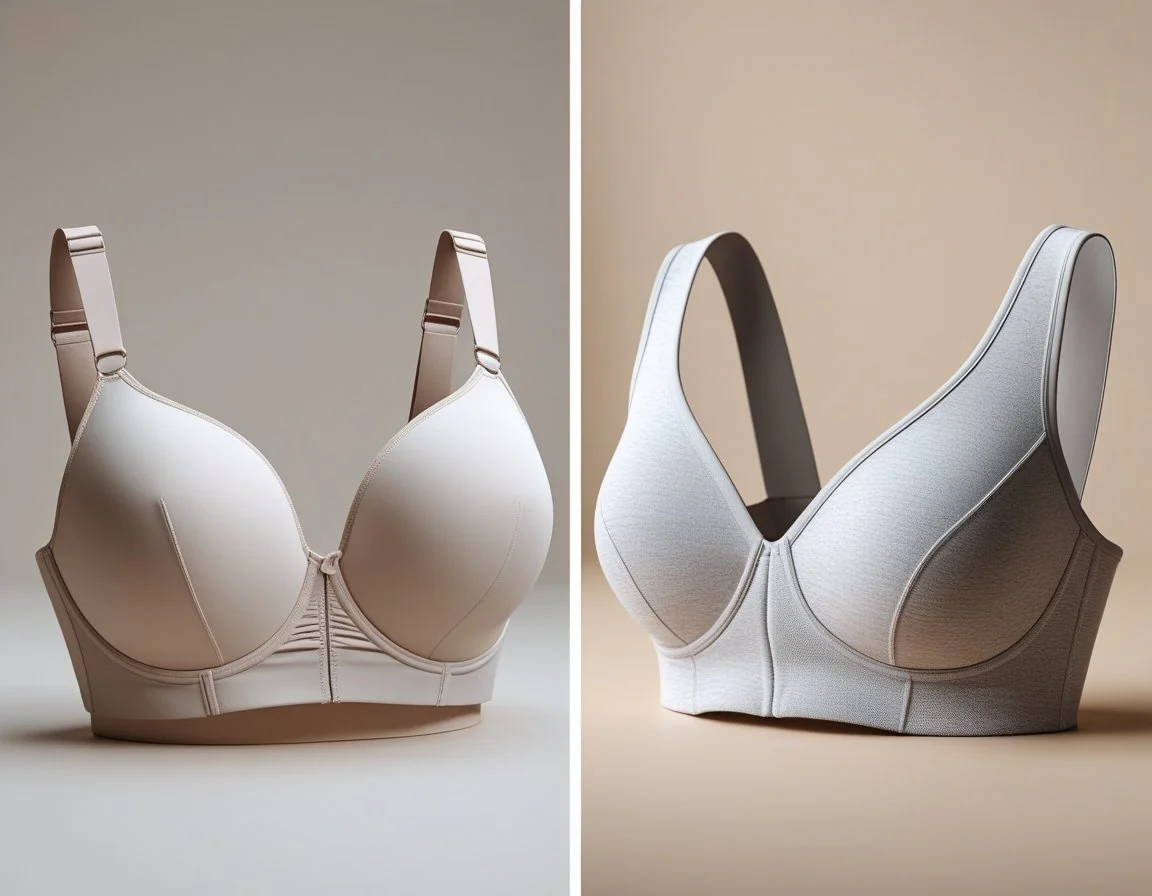
Yes, wireless bras can be supportive. Support depends on fit and construction, not only on the presence of a wire. Wireless bras are now widely worn for daily comfort. Many people assume removing the underwire removes support, but that is not how bras actually work. Support comes mainly from the band, cup structure, and fabric tension. The wire only changes the way support is delivered, not whether it exists.
In this guide, you will learn how wireless bras hold the bust, when they work well, and when they may not feel stable. Understanding your measurements first also helps, which is why using a Bra Size Calculator can make judging any bra style much easier.
What “Support” Actually Means in a Bra
Support means keeping the breasts stable and comfortable during movement. It does not always mean lifting them higher. Many people confuse lift with support. A bra can lift but still feel uncomfortable, or feel stable without pushing the bust upward.
A bra provides four different functions:
- Lift: raising the breasts upward
- Shaping: controlling the outline under clothing
- Stability: limiting excessive movement
- Comfort: distributing weight across the torso
Many people judge support only by how high the bust appears to be. But true support is about weight distribution. Most of the breast weight should be held by the band around the ribcage, not the straps on the shoulders.
The cups help position the breast, and the straps stabilize the cups. When all three parts work together, the bra feels secure without pressure points.
How Wireless Bras Support the Bust
Wireless bras support the breast by stabilizing it against the body rather than lifting it from a rigid frame. The support comes from tension, structure, and coverage working together.
Firm Band Tension
The band is the main support source in a wireless bra. When it fits snugly around the ribcage, it holds the bust close to the body and reduces movement. A loose band makes the bra feel unsupportive because the weight shifts to the straps. A properly fitted band keeps the bra anchored even without a wire.
Encapsulation Instead of Lifting
Wireless bras hold each breast in place rather than pushing it upward. This is called encapsulation. Instead of creating a raised shape, the bra stabilizes natural movement. The bust stays secure but looks softer and less structured.
Structured Fabrics
Fabric replaces the role of the wire. Strong knits, layered panels, and reinforced zones maintain shape and prevent collapse during wear. Thin stretch-only designs often feel less supportive because the material cannot resist downward pull.
Molded or Seamed Cups
Cup construction controls positioning. Molded cups guide shape, while seamed cups provide directional support and better containment. Both methods help prevent shifting inside the bra.
Strap Distribution
Straps assist support but should not carry the weight. Their job is balance, not lifting. If straps dig into the shoulders, the band is usually too loose, or the cups lack depth.
Wide Underbands
A wider underband spreads pressure across the ribcage. This increases stability and makes wireless bras comfortable for longer wear. Narrow bands concentrate pressure and can make the bra feel weaker.
Support Mechanism Difference
- Underwire = upward lift support
- Wireless = surrounding hold support
Wireless bras support differently, not less.
How Underwire Bras Provide Support
Underwire bras use a curved wire beneath the breast to anchor the cup. This wire acts like a frame:
- It lifts from below
- Holds a structured shape
- Works with the band to carry weight
Because the wire maintains the cup’s form, underwire bras create clear shaping and upward lift. This makes them feel supportive in a very visible way. This structure forms the comparison baseline when people judge wireless bras.
Wireless vs Underwire: Functional Comparison
Both styles provide support, but the mechanism differs. One lifts from below while the other stabilizes from around.
| Feature | Wireless | Underwire |
| Support method | Encapsulation + tension | Structural lift |
| Pressure points | Distributed | Focused |
| Natural movement | Higher | Controlled |
| Shape definition | Softer | Defined |
| Long-wear comfort | Often higher | Depends on fit |
When Wireless Bras Provide Enough Support
Wireless bras feel supportive during low to moderate activity. They work best when movement is gentle, and comfort is the priority.
Daily Wear
For everyday use, wireless bras keep the bust stable without constant pressure. Walking, errands, and casual outings usually do not require a rigid lift. Many people prefer them for long hours because the support feels steady rather than tight.
Desk Work
While sitting or working at a desk, the body remains mostly upright, limiting movement. In this situation, a firm band and structured cups are enough to maintain comfort throughout the day. This is why wireless bras are commonly chosen for office or study environments.
Relaxed Movement
Light household movement, such as cooking, cleaning, or a short walk,s does not create strong vertical motion. Wireless support handles this level of activity well because it stabilizes rather than lifts.
Light Activity
Gentle activities like stretching or slow walking are suitable for most wireless designs. The bra controls bounce without restricting breathing. High-impact movement is different and usually needs a stronger structure.
Comfort-Focused Wearers
People sensitive to pressure points often find wireless bras supportive because the weight is spread across the body. Instead of a single rigid point under the bust, the tension is distributed across the fabric and band areas
When They May Not Feel Supportive
Wireless bras may feel inadequate in certain conditions:
- High-impact movement
- Very projected breast shapes
- Thin stretch-only bralettes
- Incorrect sizing
- Expectation of push-up shaping
Often, the issue is not the absence of wire, but a mismatch between design and expectation.
Breast Shapes and Wireless Bra Support
Wireless bras feel supportive or unsupportive depending on breast shape. The structure holds some shapes naturally, while others need more depth or lift.
Shallow Breasts
Shallow breasts usually feel well supported in wireless bras. The tissue spreads across the chest, so it stays stable inside wide cups. Because there is less forward projection, the fabric can maintain its shape without a rigid frame.
Full on Bottom
Full-on bottom shapes often get a stable fit. The lower cup fills easily, which allows the band and cup base to anchor the breast. This reduces shifting and keeps the bra comfortable during daily wear.
Full on Top
Full on top breasts may experience upper cup collapse. Without a wire to maintain structure, softer cups can fold or flatten near the neckline. Support still exists, but the shape may look less defined.
Projected Breasts
Projected breasts sometimes need deeper cups than wireless designs provide. When the cup is too shallow, the breast pushes the fabric outward and downward. This creates the feeling that the bra is not supportive, even if the band fits correctly.
Wide-Set Breasts
Wide-set breasts are often comfortable in wireless bras. The absence of a central wire reduces pressure between the breasts. The bust can rest naturally without being forced inward.
Close-Set Breasts
Close-set breasts may find wireless bras gentler than wired styles. A wire can press into the center tissue, while wireless designs allow a softer separation.
Why the Same Wireless Bra Feels Different on Different Bodies
The same bra can feel supportive on one person and weak on another. Body frame changes how the band distributes weight.
Narrow vs Broad Ribcage
A narrow ribcage lets the band grip firmly, so support feels stronger. On a broad ribcage, tension spreads across a wider area, which can reduce the feeling of lift.
Petite vs Tall Torso
Short torsos often find wireless bras comfortable because there is less vertical distance to support. Longer torsos sometimes expect more lift, which a wired structure provides better.
Shoulder Slope and Strap Position
Sloped shoulders cause straps to slide and reduce stability. Straighter shoulders keep the bra balanced, improving support perception.
Weight Distribution
Some bodies carry breast tissue forward, others downward or outward. Wireless bras stabilize better when the weight sits closer to the chest wall.
The Biggest Reason Wireless Bras Feel Unsupportive
Most wireless bras feel unsupportive because of a fit mismatch, not missing wires. The band-and-cup relationship matters more than style.
Loose Band Doing No Work
If the band moves upward at the back, it cannot hold weight. The straps then carry pressure, and the bra feels weak.
Cup Depth Mismatch
Shallow cups push breasts downward. Deep cups stabilize them inside the bra.
Straps Carrying the Weight
Straps are stabilizers, not lifters. Shoulder digging usually means the band size is wrong.
Fabric Fatigue
Very stretchy materials lose tension during the day. Support fades even if the size was correct in the morning.
Expecting Shaping Instead of Stabilization
Wireless bras hold the bust naturally. They do not always create the rounded, lifted silhouette of wired bras.
Learning correct measurements helps avoid most of these problems. Using a Bra Size Calculator can clarify band tension and cup depth before deciding whether a style works.
How to Choose a Supportive Wireless Bra
A supportive wireless bra depends more on construction features than on appearance. Small design details change stability.
Firm Band Fit
The band should stay level around the body. You should feel snug pressure but still be able to breathe comfortably.
Cup Depth Matches Projection
Breasts should sit inside the cup without pushing it down or folding it. Wrinkles or downward pull signal mismatch.
Wide Underband
A wider base spreads pressure and improves stability. This is especially helpful for fuller busts.
Strong Fabric Tension
Look for structured knit, double layers, or reinforced zones. Very thin stretch fabric offers minimal hold.
Proper Strap Placement
Straps should sit centered on the shoulders. Too wide or too narrow placement affects balance.
Encapsulation vs Compression
Encapsulation separates each breast. Compression presses them together and reduces bounce, but it also changes their shape.
Common Problems People Experience in Wireless Bras
Fit issues are common and usually caused by tension imbalance. Each symptom points to a specific adjustment.
Uniboob
Compression cups or shallow depth press the breasts together. Encapsulation styles reduce this effect.
Rolling Band
A band that is too tight vertically or too loose horizontally flips upward. The correct band size and wider elastic fix it.
Side Spillage
The cup width is too narrow for the breast root. A wider cup or larger cup size helps.
Flattening
Soft fabric compresses the forward projection. Structured cups improve shaping.
Riding Up Back
The band is too loose and slides upward. Smaller band size restores support.
Strap Digging
Straps are compensating for the lack of band tension. Adjust the band before tightening straps.
Conclusion
Wireless bras can absolutely be supportive. The difference lies in how they support, not how much. Support depends on construction, tension, and fit more than the presence of a wire. When the size and structure match the body, a wireless bra can feel stable, comfortable, and reliable for everyday wear. Understanding these mechanics makes it easier to choose the right style for the situation and helps separate design myths from real support.

