
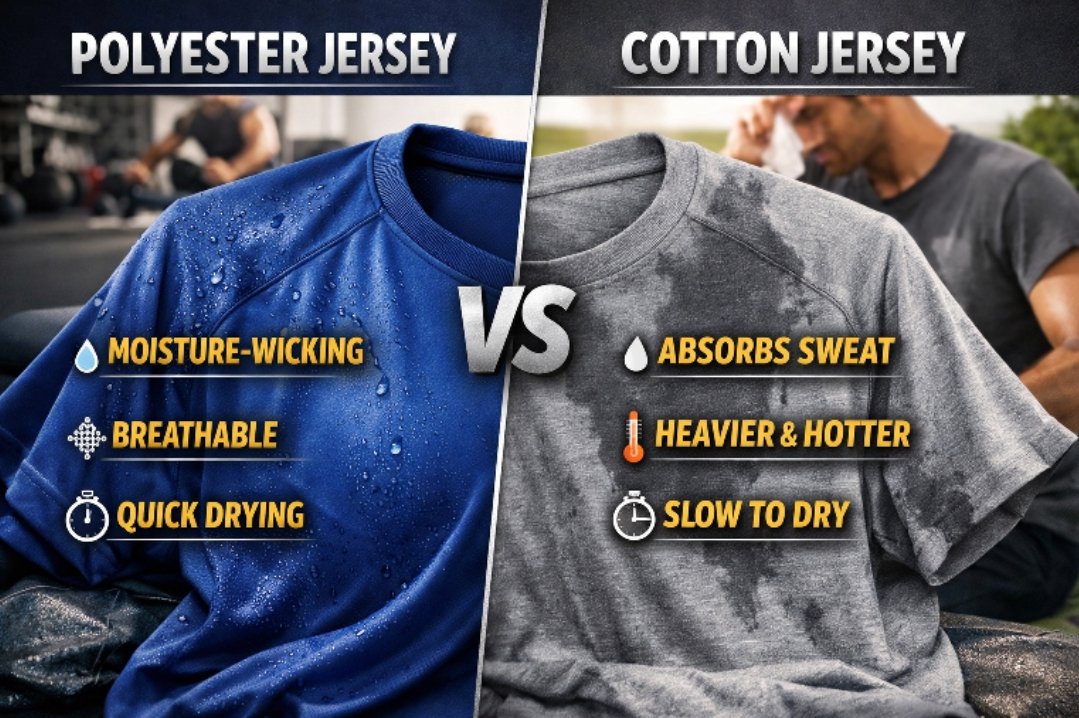
When athletes think about performance, they usually focus on training, nutrition, or equipment. But one critical factor often overlooked is fabric choice. The debate around polyester vs cotton for sports jerseys has become increasingly important as sports science continues to reveal how clothing affects endurance, comfort, and even injury prevention.
Whether you are a team manager ordering uniforms, an athlete choosing training gear, or a manufacturer developing apparel, selecting the best fabric for sports jerseys directly impacts performance. Sweat control, breathability, durability, and flexibility all depend on the material used.
In this comprehensive guide, we will break down the real differences between polyester sports jerseys and cotton sports jerseys, compare their performance in different sports and climates, and help you confidently choose the right fabric for your needs.
Understanding Sports Jersey Fabrics
What Makes a Good Sports Jersey Material?
Not all fabrics are built for athletic performance. A high quality sports jersey must balance several essential properties:
- Breathability
Allows airflow to prevent overheating during intense activity. - Moisture Management
Moves sweat away from the skin to keep athletes dry. - Stretch and Flexibility
Supports unrestricted movement during play. - Durability
Withstands washing, friction, and repeated use. - Lightweight Feel
Reduces fatigue during long matches.
Modern athletic apparel is engineered with these factors in mind, which is why fabric selection has evolved dramatically over the last two decades.
Why Fabric Choice Impacts Athletic Performance
Fabric influences:
- Body temperature regulation
- Comfort during extended gameplay
- Reduced skin irritation and chafing
- Overall endurance
Sports scientists consistently highlight that moisture buildup increases fatigue during intense matches. Choosing performance fabrics is therefore not only about comfort but long term endurance, which is why many teams now invest in high performance custom sports jerseys built specifically for competitive environments.
What Is Polyester Fabric?
How Polyester Is Made
Polyester is a synthetic fiber created from polymer compounds derived from petroleum. The fibers are engineered to achieve specific performance properties, making polyester one of the most widely used materials in modern sportswear.
Manufacturers can modify polyester structure to enhance stretch, ventilation, and sweat evaporation.
Key Features of Polyester Sports Jerseys
Polyester sports jerseys are designed specifically for athletic environments.
- Moisture wicking material pulls sweat away from skin
- Lightweight construction reduces drag
- Quick drying capability
- Excellent color retention for team branding
- Wrinkle and shrink resistance
Pros and Cons of Polyester Jerseys
Pros
- Performance oriented fabric
- Highly durable
- Maintains shape after many washes
- Ideal for high intensity sports
Cons
- Can retain odor if not washed properly
- Less natural feel compared to cotton
These polyester athletic wear advantages explain why professional teams overwhelmingly choose synthetic fabrics.
What Is Cotton Fabric?
How Cotton Fabric Is Produced
Cotton is a natural fiber harvested from cotton plants. The fibers are spun into yarn and woven into soft, breathable fabric widely known for comfort.
Unlike synthetic materials, cotton relies on natural absorption rather than engineered moisture control.
Features of Cotton Sports Jerseys
Cotton sports jerseys are valued for:
- Natural fibers
- Soft texture against skin
- High breathability
- Hypoallergenic qualities
Pros and Cons of Cotton Jerseys
Pros
- Extremely comfortable
- Skin friendly
- Natural and biodegradable
Cons
- Absorbs sweat instead of wicking it
- Becomes heavy when wet
- Dries slowly
This cotton vs synthetic sportswear difference is the main reason cotton struggles in competitive athletics.
Polyester vs Cotton for Sports Jerseys: Side by Side Comparison
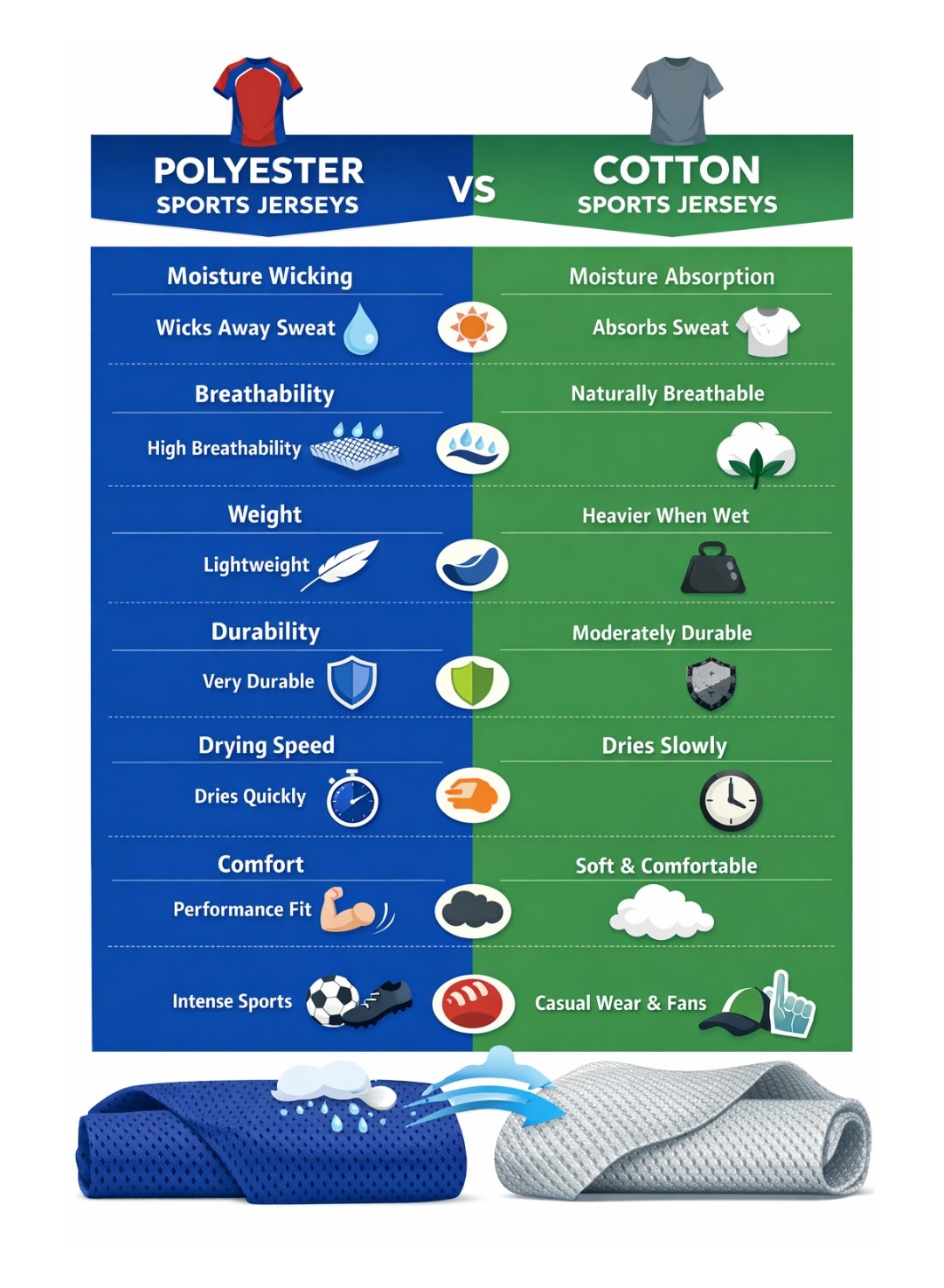
| Feature | Polyester Jerseys | Cotton Jerseys |
| Moisture Control | Excellent wicking | Absorbs sweat |
| Breathability | High with mesh designs | Naturally breathable |
| Comfort | Smooth but synthetic | Soft and natural |
| Durability | Very high | Moderate |
| Weight | Lightweight | Heavy when wet |
| Maintenance | Easy care | Requires careful drying |
| Cost | Moderate | Often lower upfront |
Moisture Wicking Performance
Polyester moves sweat outward for evaporation. Cotton traps moisture, causing discomfort during intense activity.
Breathability Comparison
Cotton breathes naturally, but modern polyester mesh structures often outperform it during sports.
Comfort and Feel
Cotton wins in softness. Polyester wins in performance comfort.
Durability and Longevity
Polyester resists stretching, shrinking, and fading better than cotton.
Weight and Flexibility
Polyester remains light even when sweating heavily.
Maintenance and Washing
Polyester dries quickly and maintains shape easily.
Cost Comparison
Cotton may cost less initially but wears out faster in sports environments.
Which Fabric Is Better for Different Sports?
Football and Soccer Jerseys
Polyester is ideal due to sweat management and durability. Professional leagues almost exclusively use synthetic jerseys.
Basketball Jerseys
Lightweight polyester mesh improves ventilation during indoor games.
Running and Training Wear
Runners benefit from moisture wicking fabrics that prevent friction and overheating.
Casual or Fan Jerseys
Cotton works well for spectators or lifestyle wear where performance is less critical.
Polyester Blends vs 100% Cotton Jerseys
Poly Cotton Blends Explained
Poly cotton combines polyester durability with cotton comfort, creating a balanced fabric.
When Blended Fabrics Work Best
- Training sessions
- School uniforms
- Recreational sports
- Lifestyle athletic wear
Performance vs Comfort Balance
Blends offer compromise: better moisture control than cotton and softer feel than polyester.
Climate Considerations: Choosing the Right Fabric
Hot and Humid Weather Performance
Polyester performs better because sweat evaporates quickly, preventing overheating.
Cold Weather Training
Layered polyester helps regulate body temperature by keeping moisture away from skin.
Indoor vs Outdoor Sports
Outdoor sports benefit more from performance fabrics due to environmental exposure.
Sustainability and Environmental Impact
Is Polyester Eco Friendly?
Traditional polyester is petroleum based, but recycled polyester significantly reduces environmental impact.
For deeper insight into textile sustainability, organizations like the Textile Exchange provide research on recycled fibers and responsible production practices.
Organic Cotton and Sustainable Options
Organic cotton reduces pesticide use but still consumes significant water resources.
Recycled Polyester Jerseys
Many brands now produce jerseys from recycled plastic bottles, combining performance with sustainability.
Keywords targeted here include sustainable sports jerseys and eco friendly athletic fabrics.
How to Choose the Best Sports Jersey Fabric (Buyer Guide)
Use this checklist before deciding:
✔ Type of sport
✔ Intensity level
✔ Climate conditions
✔ Frequency of use
✔ Budget constraints
✔ Custom printing requirements
✔ Team branding needs
For example, sublimation printing works best on polyester, making it ideal for teams designing personalized uniforms. If you are exploring options, a detailed sportswear fabric guide can help compare printing compatibility and durability factors.
You may also want to review a practical resource on how to design team uniforms to ensure material and design work together effectively.
Expert Verdict: Polyester or Cotton?
Choose Polyester If You Want:
- High performance athletic wear
- Moisture management
- Long lasting uniforms
- Professional level play
Choose Cotton If You Want:
- Everyday comfort
- Casual fan jerseys
- Low intensity activities
For serious athletic performance, polyester clearly leads. For lifestyle comfort, cotton still has value.
Conclusion: The Right Fabric Depends on How You Play
The comparison between polyester vs cotton for sports jerseys ultimately comes down to purpose. Polyester dominates competitive sports because it enhances performance through moisture control, durability, and lightweight comfort. Cotton remains a strong option for casual wear and comfort focused applications.
If you are selecting uniforms for a team or upgrading your athletic gear, prioritize performance needs first, then comfort preferences.
Next Steps:
- Evaluate your sport and climate
- Compare fabric performance requirements
- Choose materials aligned with athlete demands
If this guide helped you, consider sharing it with teammates or leaving a comment about your experience with different jersey fabrics. Your insights could help others make smarter athletic gear decisions.
FAQ
Is polyester better than cotton for sports jerseys?
Yes, for performance sports. Polyester manages sweat and maintains lightweight comfort during activity.
Why do professional teams use polyester jerseys?
Because it offers durability, moisture control, and long lasting color quality.
Are cotton jerseys good for sweating?
Not ideal. Cotton absorbs sweat and becomes heavy.
Is 100% Polyester Really Dry Fit?
Yes, 100% polyester is often called Dry fit because this fabric is made from synthetic fibers that are built for sports jerseys and active use.
In my experience after wearing it in tough workouts, the material is constructed with detailed engineering so these performance fabrics support performance, and they usually include some form of silver for anti-odor, or copper for anti-microbial protection, while a blend like spandex and elastene can improve comfort, stretch, and how the synthetic fibers feel on the body.
Are cotton uniforms better than polyester?
When I pick a sports jersey, I think about how it feels and how long it will last. In my experience, high-quality cotton can feel easy on the skin, and it can make a quality uniform if it is cared for properly. It is also easy to wash and iron, and over the years, that comfort can really matter during training days.
But Polyester can be the smarter choice when you want less work and more reliability. It can limit the fabric options for uniforms, but it also makes up for it with wash and wear ease. I have seen it stay strong because it does not wrinkle or shrink, and it keeps its shape, which helps jerseys look neat even after a tough season.
Which fabric is best for a sports jersey?
When I choose Fabrics for Sports Jerseys, I focus on Key Features that feel good while playing, because the Best Fabric For comfort and performance depends on the sport. In my experience, Polyester is a great option because it is moisture-wicking, handles moisture, supports wicking, and stays lightweight, so it works well for Soccer, basketball, and hockey.
If you want something durable and soft, Nylon is also strong, and it is quick-drying for quick drying after practice. For extra stretch, Polyester-Spandex is Stretchable and includes Spandex, which suits Cycling and fitted styles. In warm climates, Mesh is Breathable, making it helpful for Track, field, and tennis.
Which Is Better for Sportswear?
For sports jerseys, I usually choose Polyester for workouts, especially intense workouts, because when it gets intense and you start to sweat, its sweat-wicking, quick-drying, and durable properties make it feel better, and moisture becomes less of a significant factor, thanks to how it performs.
But Cotton is more suited for light workouts and casual wear, because it stays light and comfortable for casual wear, especially when moisture is close to 0.

